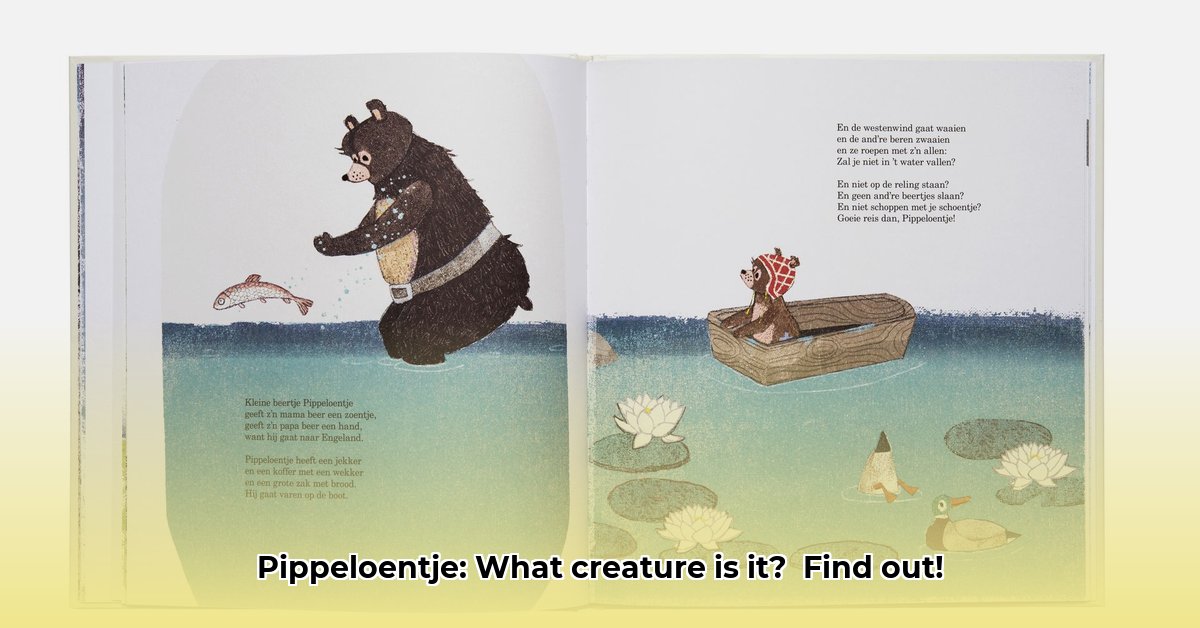
Wat Is Pippeloentje Voor Een Dier? The Great Dutch Rodent Mystery
Ever stumbled across a cryptic crossword clue, or a curious online chat, mentioning a "Pippeloentje"? This seemingly innocuous word has ignited a delightful debate amongst Dutch speakers and animal enthusiasts alike. It appears to describe a small, playful rodent, yet scientific evidence remains frustratingly elusive. This article delves into the heart of the Pippeloentje mystery, blending scientific investigation with cultural exploration. Prepare for a uniquely South African take on a uniquely Dutch puzzle!
The Pippeloentje Puzzle: A Small Animal, A Big Mystery
The descriptions are remarkably consistent: a small, playful rodent. Think tiny, furry, with a long tail – charming, even. But this consistency ends with the specifics. How big is it, exactly? What's its fur colour? What does it eat? These crucial details remain frustratingly unknown. The absence of documented sightings, scientific records, or museum specimens makes this more than just another animal identification puzzle; it's a full-blown mystery, like trying to solve a crime with only a single, blurry witness statement.
Clues in the Culture: More Than Just a Name
Despite the lack of tangible scientific proof, Pippeloentje pops up regularly in Dutch popular culture. It's not a fleeting reference; the name feels deeply ingrained, woven into the very fabric of Dutch life, raising fascinating questions about the creature's cultural significance. Could Pippeloentje be a creature of myth, a playful sprite passed down through generations of stories? Is it a reflection of a shared cultural experience? The cultural context seems as vital as any physical evidence.
The Scientific Sleuthing: A Case of Missing Evidence
Let's don our scientific detective hats. Comparing descriptions of Pippeloentje to known Dutch rodent species is a starting point, but it's a daunting task. Without physical evidence – an image, DNA, or even a detailed observation – pinpointing the animal is akin to identifying a bird solely by its (possibly imagined) song. The challenge highlights the limitations of relying solely on anecdotal evidence in zoological classification.
Ethnozoology Enters the Stage: Culture and Critters
This is where ethnozoology comes in – the study of animals within their cultural contexts. By exploring Dutch folklore, children's stories, and local dialects, we might unearth connections that scientific data alone cannot provide. This approach acknowledges the crucial role culture plays in shaping animal perception and naming conventions, potentially shedding light on the true meaning of the term “Pippeloentje.”
What Could Pippeloentje Be? Exploring the Possibilities
Several explanations emerge:
- Mistaken Identity: Perhaps Pippeloentje is a delightful nickname for a commonly known Dutch rodent, like a field mouse or wood mouse. It's a simple, yet plausible explanation.
- A Forgotten Species: Could Pippeloentje represent a rodent species once documented but subsequently forgotten or reclassified? Scientific taxonomy evolves; this isn't impossible.
- A Creature of Myth: This remains the most captivating possibility. Could Pippeloentje be a purely mythical creature, a product of imagination, existing only in word puzzles and online chatter?
Unraveling the Mystery: A Plan of Action
Solving this puzzle requires a collaborative, multidisciplinary approach:
- Etymological Investigation: Delving into the origins and evolution of the word "Pippeloentje" could yield unexpected clues.
- Fieldwork: On-the-ground investigation in regions where Pippeloentje is frequently mentioned could reveal unexpected sightings or relevant information.
- Expert Collaboration: Collaborating with Dutch naturalists, folklorists, and linguists is crucial for a holistic approach.
- Image Analysis: Even a blurry image, a simple sketch – any visual material – warrants thorough analysis.
The Continuing Quest: A Mystery Unresolved (For Now)
The identity of Pippeloentje remains a charming enigma. The very existence of this mystery, however, highlights the rich interplay between popular culture, language, and scientific inquiry. The Pippeloentje riddle underscores the inherent limitations of relying purely on anecdotal evidence in zoological classification. It serves as a reminder of the captivating power of unsolved mysteries, and the ongoing need for rigorous scientific investigation.